
Okeechobee Multi-Day Arrest Reports
The sheriff's office keeps no online multi-day arrest log. OCSO defines no weekly window and says nothing about how long old entries stay up. For a recurring digest, turn to Lake Okeechobee News. Its Okeechobee County Arrest Report runs inside regular issues rather than serving as a live jail database.
The digest leans toward felony and DUI arrests. That focus leaves gaps. Still, its agency mix is broad. Items can be credited to OCSO, the Okeechobee Police Department, Florida Highway Patrol, Florida Fish and Wildlife Conservation Commission, Florida Department of Corrections, CAT, or ONTF. Handy as that spread is, the newspaper column never replaces the county jail's current-custody roster.
Okeechobee Report Entry Fields
A news item can be thin. Still, a Lake Okeechobee News entry often holds enough facts to identify a booking event and request its official file. Gaps are normal, since no item promises every field, every misdemeanor, every citation, or each later custody change.
| Entry field | What it means |
|---|---|
| Name, age, residence | Basic identity context printed by the newspaper; verify close matches. |
| Arrest date | Date of the reported arrest, which may differ from publication or booking dates. |
| Agency or deputy | The law-enforcement source connected to the arrest. |
| Charge | The charge reported at that stage. |
| Bond | A reported amount that may change after court review or release. |
| Booking photograph | Not guaranteed in the text arrest report; separate stories may use case images. |
A full booking record goes beyond news print. It can hold a booking number, booking time, physical details, probable-cause material, release method, and a returnable court date. Those fields belong to the agency file. News digests just leave them out, so ask the correct custodian for the document rather than treating a short item as a full arrest affidavit.
Note: A newspaper item describes a past reported arrest and does not confirm that the person remains in Okeechobee County Jail.
Read Okeechobee Arrest Reports Carefully
Start with the report's own date. Check its stated scope too. Both details tell you what the Okeechobee arrest report actually covers before you trace any entry back to its source.
- Open the dated Lake Okeechobee News issue and locate the county arrest report.
- Record the person’s name, arrest date, arresting agency, reported charge, and bond.
- Compare the arrest date with the issue date; publication may occur well after intake.
- Check current custody through OCSO only if the present jail status matters.
- Request the official booking or arrest document, then use the Clerk’s court record for the disposition.
The WQCS Okeechobee County page shows event-driven regional reporting.
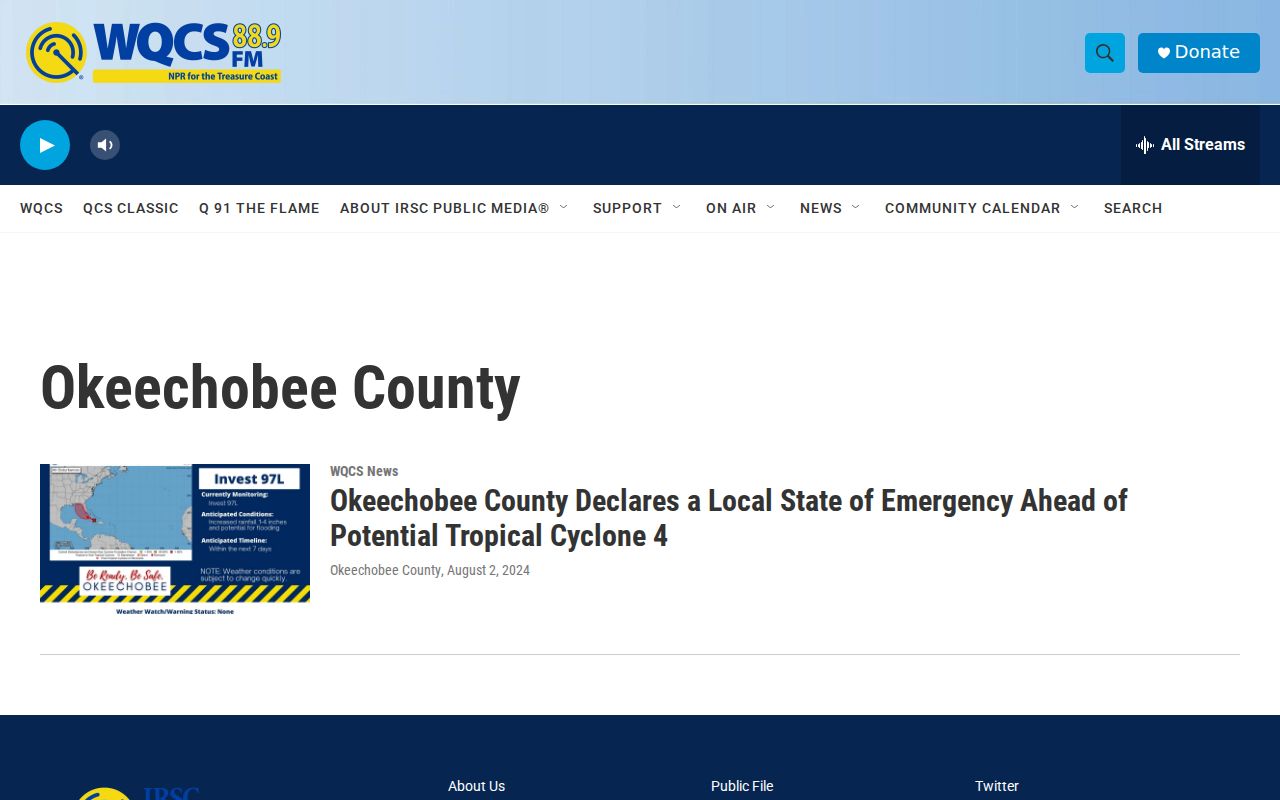
The view is handy for finding a reported case, yet it is no daily Okeechobee booking ledger.
Okeechobee Weekend Report Timing
The sheriff posts no weekend rule. Nothing online says when multi-day arrest logs update over holidays either. The newspaper follows its issue schedule. Editorial deadlines decide which Okeechobee bookings land in a given collection of arrests. Jail traffic plays no part. No source backs the claim that the sheriff waits until Monday to post weekend arrests.
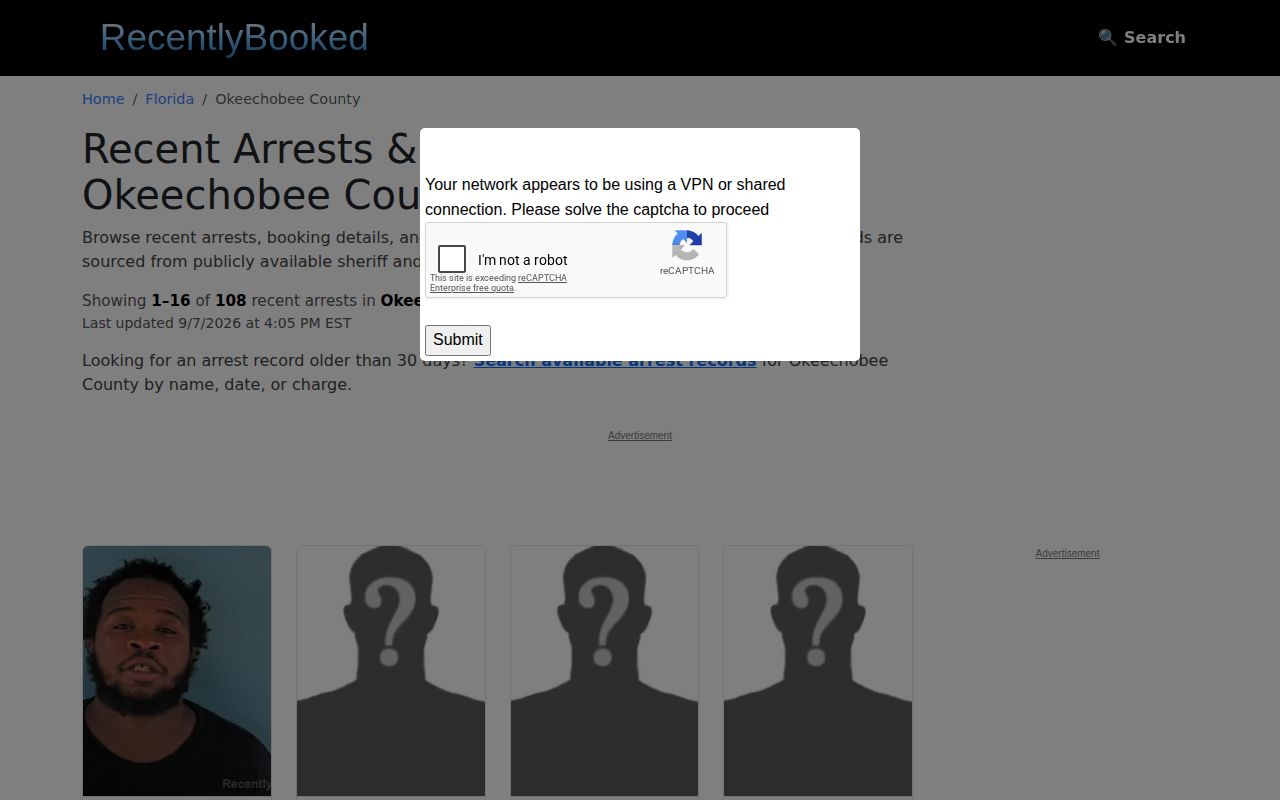
Unofficial sites add their own timing quirks. RecentlyBooked claims its Okeechobee page refreshes several times daily. It also lists a 30-day window. That is the publisher's claim, not an OCSO schedule. A listing can linger after release or appear late. It can stay missing even when an official record exists.
- Issue date
- The date a newspaper edition is published.
- Arrest date
- The date law enforcement took the person into custody.
- Booking date
- The time jail intake created the booking record.
- Release date
- The date county custody ended by bond, sentence, transfer, or another method.
Unofficial Okeechobee Booking Archives
Official sources come first. When no dated OCSO record is in hand, county-focused third-party pages can supply leads. Treat them loosely. They can go stale, run incomplete, or blend jail data with later information, so a blank result never proves a person avoided arrest. The RecentlyBooked Okeechobee page presents a multi-day county view.
The Mugshots.com Okeechobee County section shows a historical publisher archive. Date-based browsing there can surface older items, but each one still needs OCSO and court verification.
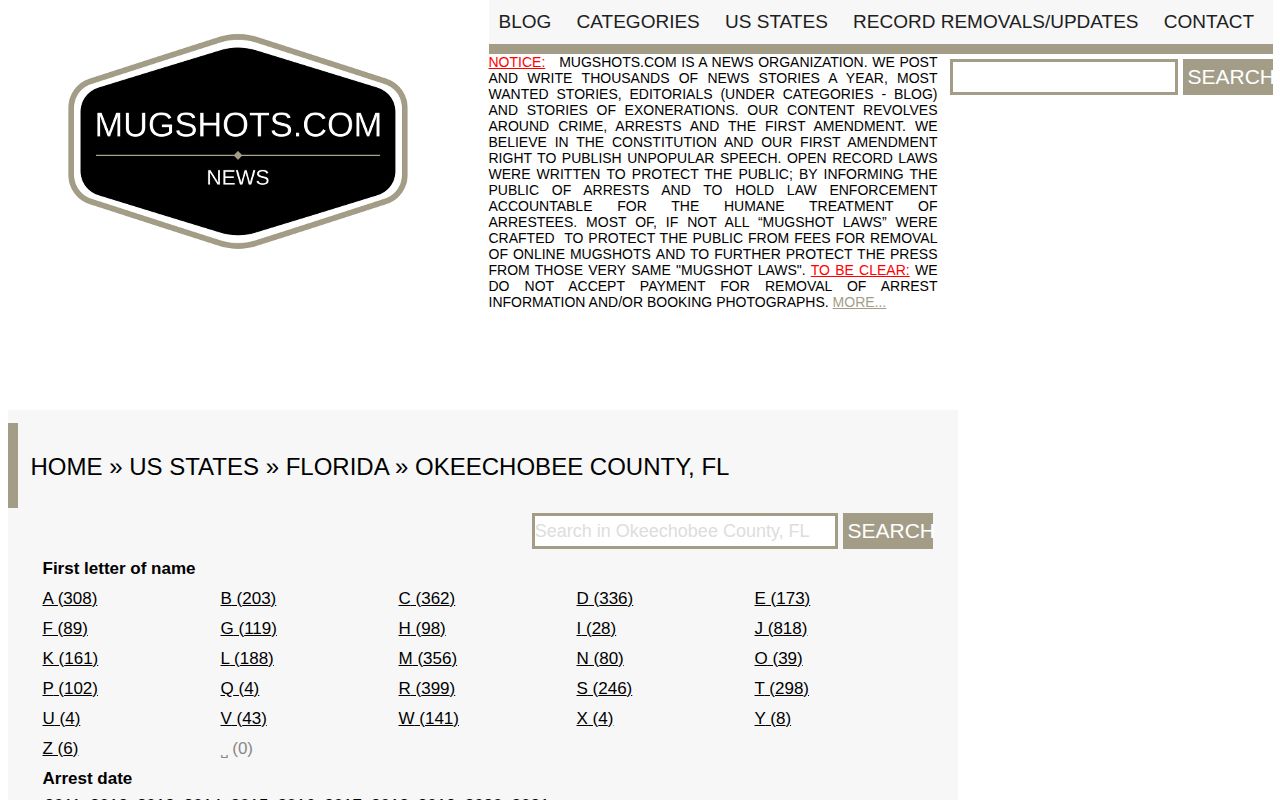
Age matters on these archives. Older date filters can point toward a past Okeechobee event, though some pages blend county booking data with Florida corrections details. Arrests.org also has an Okeechobee County page. Its snapshot displayed no results, and an empty state cannot prove the county had no bookings. Busted Newspaper carries dated Okeechobee entries as well. It posts its own accuracy disclaimer, and none of these publishers should displace an official records request.
Recover Older Okeechobee Arrest Records
Web visibility is not record retention. Florida's GS2 schedule sets minimum keeping periods for many criminal-justice record series. Booking records, commitment and release lists, and adult incarceration records carry a minimum of one anniversary year after release. Jail docket books are permanent. Agencies may keep records longer, and another schedule, legal hold, or local need can control.
Those periods say nothing about public websites. An Okeechobee roster entry can vanish while the agency file survives, and a newspaper PDF can stay searchable long after the official current-custody result is gone. Recovery starts with the original custodian.
- Send OCSO the exact name, approximate date, arresting agency, and booking number if known.
- Specify the booking card, arrest affidavit, release list, jail docket entry, or booking photograph sought.
- Ask which GS2 item or approved schedule covers the file if the date is old.
- Search the Okeechobee Clerk’s criminal case records for the case outcome.
- Use historical newspaper issues only as dated reporting, not as present custody proof.
OCSO's Records Clerk Department takes requests. Email works at records@okeesheriff.com, phone at 863-763-3117, walk-ins at 504 NW 4th Street, or file via the GovQA portal. Review hours run 8:00 a.m. to 5:00 p.m., weekdays, excluding holidays.
Note: An archive preserves a dated account; only the court docket can establish the final disposition of the reported charge.
Okeechobee Agencies in News Reports
Lake Okeechobee News stands apart in one way. Its arrest report credits more than one agency. OCSO and OCPD show up beside FHP, FWC, DOC, CAT, and the ONTF. That matters for searchers. A person can land in the Okeechobee County jail. Some other agency may have made the arrest. Keep the arresting agency and the detention facility separate in your notes.
Regional television works on a different clock. WPTV's Okeechobee page and WQCS coverage run story by story. WPBF picks certain investigations and wanted cases. None of them posts a full daily booking feed. Their photos belong to the story, not to any jail's booking-photo policy.
Same-day questions point to the live roster and booking line. Multi-day hunting points to dated issues, official requests, and court follow-up. For someone who may be in custody right now, see Arrested Today in Okeechobee County.
Okeechobee Reports Are Not Verdicts
An Okeechobee arrest report captures a case at its earliest stage. The Clerk of Court holds what follows. Adult case details stay on file with the Clerk. That holds even after a dismissal or nolle prosequi. Only a lawful expungement changes public access to that record.
Each source in Okeechobee County has its own job. The live jail roster answers who is in custody today. A newspaper digest covers selected past arrests. The OCSO file carries the agency record, the Clerk carries the case, and keeping those roles straight keeps a dated blotter from masquerading as a final outcome.